Understanding Shoe Box Dimensions: Why Size Matters
When it comes to footwear packaging, choosing the correct shoe box dimensions is just as important as designing the shoes themselves. A well-sized shoe box protects the product, reduces shipping costs, improves storage efficiency, and enhances the customer experience.
At BoxesPackage, we specialize in manufacturing custom shoe boxes for footwear brands worldwide. Whether you sell athletic shoes, luxury heels, children’s footwear, or work boots, selecting the right packaging dimensions can significantly impact your operational costs and brand image.
This guide explains standard shoe box dimensions, sizing considerations, packaging requirements for different shoe styles, and how custom packaging can help footwear brands maximize efficiency and profitability.
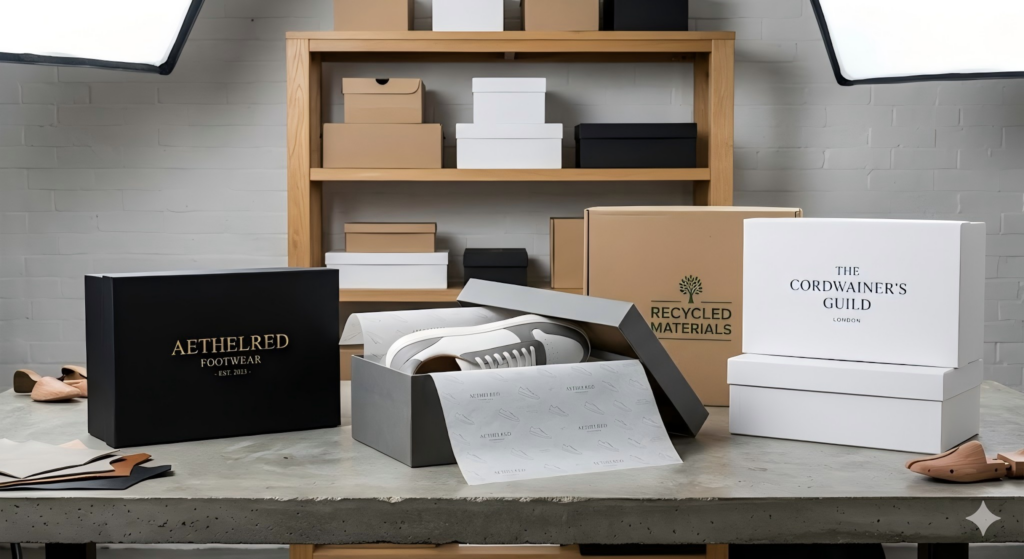
Why Shoe Box Dimensions Are Important
Many businesses focus primarily on product quality and branding while overlooking packaging dimensions. However, box size directly affects several critical areas of a footwear business.
Product Protection
The primary purpose of a shoe box is to protect footwear during transportation and storage.
A box that is too large allows shoes to move inside during shipping, increasing the risk of scratches, creases, and structural damage.
Conversely, a box that is too small may compress the shoes, causing deformation and reducing product quality.
Properly sized packaging ensures shoes arrive in perfect condition.
Lower Shipping Costs
Shipping companies often calculate charges using dimensional weight rather than actual weight.
Oversized packaging increases shipping expenses because carriers charge for the space occupied by the package.
Optimized shoe box dimensions help reduce transportation costs and improve profit margins.
Improved Warehouse Efficiency
Accurate packaging dimensions maximize warehouse storage capacity.
Thousands of oversized boxes can consume unnecessary storage space, resulting in higher inventory management costs.
Choosing the correct dimensions helps businesses organize inventory more efficiently.
Better Customer Experience
Customers expect premium products to arrive in premium packaging.
A perfectly fitted shoe box enhances the unboxing experience and strengthens brand perception.
Understanding Shoe Box Measurements
Every shoe box consists of three primary dimensions:
Length
Length is the longest side of the box.
For footwear packaging, length is measured from the toe area to the heel area of the shoe.
Width
Width refers to the side-to-side measurement across the base of the box.
This dimension must accommodate the widest part of the shoe.
Height
Height is the vertical measurement from the bottom of the box to the lid.
Different shoe styles require different box heights.
The Importance of Extra Space
Footwear should never fit tightly inside the box.
Most packaging experts recommend allowing approximately:
- 1 to 2 inches of extra length
- 1 to 2 inches of extra width
- Adequate height clearance
This additional space helps prevent compression and allows room for protective materials such as tissue paper or inserts.
The goal is to protect the footwear without creating excessive empty space.
Standard Shoe Box Dimensions in the USA
While there is no universal shoe box size, most footwear brands use standard ranges based on customer demographics.
Children’s Shoe Boxes
Typical dimensions include:
- Length: 10–12 inches
- Width: 6–7 inches
- Height: 3.5–4 inches
Children’s shoes are generally lightweight and require less packaging volume.
Women’s Shoe Boxes
Common dimensions are:
- Length: 12–13 inches
- Width: 7–8 inches
- Height: 4–5 inches
These dimensions accommodate most flats, sneakers, and casual footwear.
Men’s Shoe Boxes
Standard men’s shoe boxes are larger:
- Length: 13.5–14.5 inches
- Width: 8–10 inches
- Height: 5–5.5 inches
These dimensions provide sufficient space for larger shoe sizes and athletic footwear.
How Shoe Styles Affect Packaging Dimensions
Different footwear categories require specialized packaging solutions.
Running Shoes and Athletic Footwear
Modern athletic shoes often feature:
- Thick midsoles
- Cushioned structures
- Larger overall volume
These products typically require wider and deeper boxes.
High Heels
Heels demand additional vertical clearance.
Packaging for high heels often requires:
- Greater box depth
- Reinforced interior support
- Protective inserts
These features help prevent damage to delicate heel structures.
Boots
Boots require specialized packaging due to their height.
Examples include:
Ankle Boots
Moderate increases in box height are usually sufficient.
Combat Boots and Work Boots
These styles often require:
- Extra-long boxes
- Increased height
- Reinforced corrugated packaging
Wedge Shoes
Wedges generally require additional width to accommodate their broader sole design.
Custom Shoe Boxes vs Standard Shoe Boxes
Many footwear brands eventually move from standard packaging to custom shoe boxes.
Why?
Because custom packaging provides several advantages.
Perfect Product Fit
Custom dimensions eliminate unnecessary empty space while maintaining adequate protection.
Enhanced Branding
Custom shoe boxes can feature:
- Brand logos
- Product graphics
- Premium finishes
- Custom colors
This creates a stronger brand identity.
Better Customer Experience
Premium packaging contributes to memorable unboxing experiences that encourage customer loyalty.
Lower Logistics Costs
Optimized dimensions help reduce:
- Shipping expenses
- Storage costs
- Packaging waste
Understanding Dimensional Weight (DIM Weight)
One of the most overlooked aspects of footwear packaging is dimensional weight pricing.
Shipping carriers calculate dimensional weight using package volume rather than actual weight.
The formula typically considers:
Length × Width × Height
This means a lightweight shoe box can still incur high shipping charges if the dimensions are unnecessarily large.
For example:
A pair of lightweight running shoes packed in an oversized box may cost significantly more to ship than the same product packaged efficiently.
Custom-sized packaging helps reduce DIM weight charges and improve shipping efficiency.
Choosing the Right Shoe Box Material
Material selection also impacts packaging performance.
Paperboard Shoe Boxes
Ideal for:
- Retail displays
- Lightweight footwear
- Premium printing applications
Corrugated Shoe Boxes
Suitable for:
- E-commerce shipping
- Heavy footwear
- Long-distance transportation
Rigid Shoe Boxes
Used for:
- Luxury footwear
- Designer brands
- Premium unboxing experiences
BoxesPackage offers all three material options with complete customization capabilities.
Why Choose BoxesPackage for Custom Shoe Boxes?
As a professional packaging manufacturer in China, BoxesPackage provides fully customized shoe packaging solutions for global footwear brands.
Our advantages include:
- Custom dimensions
- Low MOQ options
- Premium printing services
- Sustainable materials
- Fast production times
- Worldwide shipping
- Competitive factory-direct pricing
Whether you manufacture sneakers, dress shoes, boots, sandals, or luxury footwear, our packaging experts can create a solution tailored to your exact requirements.
Final Thoughts
Choosing the right shoe box dimensions is essential for protecting footwear, reducing shipping costs, maximizing storage efficiency, and creating a positive customer experience.
While standard shoe box sizes work for many products, custom shoe packaging provides superior protection, branding opportunities, and logistics optimization.
At BoxesPackage, we help footwear brands develop high-quality custom shoe boxes designed to meet both functional and marketing objectives. With premium materials, advanced printing technologies, and complete customization options, we create packaging solutions that elevate your products and strengthen your brand presence in today’s competitive footwear market.